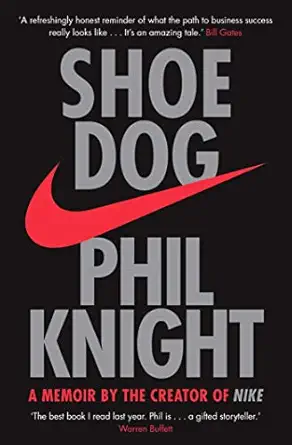
Shoe Dog
By Phil Knight
Core Book Summary
Shoe Dog is the deeply personal, brutally honest, and immensely inspiring memoir of Phil Knight, the legendary founder and former CEO of Nike. Unlike most polished business books that preach a foolproof formula for success, Knight's story reveals the chaotic, terrifying, and often completely unglamorous reality of building a global empire from scratch. The book begins in 1962, when a young, directionless Phil Knight borrows $50 from his father to import high-quality, low-cost athletic shoes from Japan (Onitsuka Tiger). Selling shoes out of the trunk of his Plymouth Valiant, Knight grossed a mere $8,000 in his first year. Today, Nike's annual sales exceed $50 billion. The memoir highlights the power of a 'Crazy Idea'. Knight was deeply passionate about running and truly believed that if everyone ran a few miles every day, the world would be a better place. This wasn't just a business to him; it was a calling. He partnered with his former track coach, Bill Bowerman, a brilliant but eccentric man who was obsessed with altering shoes to shave fractions of a second off his runners' times. Together, they formed an unlikely but perfect team. The book details the immense struggles they faced: relentless legal battles, constant betrayals by suppliers, and the agonizing, daily threat of complete bankruptcy. For the first decade, Knight was constantly begging banks for loans, living on the absolute brink of financial ruin while his sales doubled every year (the classic cash-flow problem of hyper-growth). One of the most striking elements of Shoe Dog is Knight's approach to leadership and team building. He didn't hire corporate executives; he hired misfits, outcasts, and people who shared his absolute obsession with sports and winning. He believed in micromanaging less and trusting more, operating on the philosophy of 'Don't tell people how to do things, tell them what to do and let them surprise you with their results.' Shoe Dog shatters the illusion of overnight success. It took Knight nearly two decades of grueling, exhausting work before Nike truly stabilized. It is a story about the absolute necessity of resilience, the importance of fighting for a brand that actually stands for something, and the beauty of going all-in on your passion. Ultimately, Knight's message to young entrepreneurs is clear: 'Let everyone else call your idea crazy... just keep going. Don't stop. Don't even think about stopping until you get there, and don't give much thought to where 'there' is.'
Key Takeaways
- Pursue a Crazy Idea: Don't settle for a normal job or a normal life. Find something you are so passionate about that others might think you are crazy, and go all-in on it.
- Business is a Calling: If you are only in it to make money, you will quit when things get too hard. You must see your work as a calling, a mission to bring something valuable to the world.
- Embrace the Chaos: Startups are inherently messy, terrifying, and chaotic. Stop waiting for the 'perfect time' or a 'perfect plan'. Action and adaptation are far more important than planning.
- Build a Team of Believers: You don't need people with the best corporate resumes. You need misfits and passionate individuals who deeply believe in your mission and will fight for it.
- Don't Micromanage: Phil Knight's core management philosophy was simple: Tell your team what the goal is, but never tell them exactly how to achieve it. Let their creativity surprise you.
- Growth Consumes Cash: Even if your sales are doubling every year, you can still go bankrupt. Rapid growth requires massive amounts of cash, leading to a constant, stressful battle with banks.
- Innovation is Continuous: Bill Bowerman constantly ruined shoes (and his wife's waffle iron) trying to make them lighter and faster. You must relentlessly innovate to stay ahead of the competition.
- Your Brand Needs a Soul: Nike isn't just selling shoes; they are selling the spirit of athletes and the will to win. Your product must evoke a feeling and stand for a deeper ideology.
- Failure is Just a Step: Knight was betrayed by his Japanese partners and faced multiple lawsuits that could have destroyed him. He viewed these not as the end, but as problems that needed to be outmaneuvered.
- Just Keep Going: The only true failure is stopping. No matter how many banks reject you or how many times you are on the brink of ruin, you must develop an unstoppable resilience.