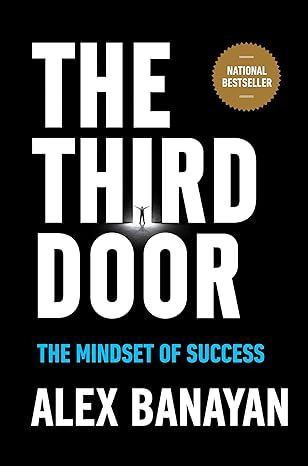
The Third Door
By Alex Banayan
Core Book Summary
The Third Door: The Wild Quest to Uncover How the World's Most Successful People Launched Their Careers is a deeply inspiring coming-of-age story and business book by Alex Banayan. The premise of the book began when Banayan was an 18-year-old college freshman sitting in his dorm room, completely unsure of what to do with his life. He realized that the world's most successful people—like Bill Gates, Lady Gaga, Steven Spielberg, and Warren Buffett—did not achieve their monumental success by following the traditional, expected paths. Banayan decided to hack the 'Price Is Right' game show, won a sailboat, sold it, and used the prize money to fund a multi-year quest to track down these global icons and interview them about their early breakthroughs. The central metaphor of the book is that life, business, and success are exactly like a nightclub. There are always three ways in. The First Door is the main entrance, where 99% of people wait in a long, endless line, hoping to get in. The Second Door is the VIP entrance, strictly reserved for billionaires, celebrities, and those born into massive privilege. But then there is always, always... The Third Door. It's the entrance where you have to jump out of the line, run down the alley, bang on the side door a hundred times, crack open the window, or sneak through the kitchen. Whether it's Bill Gates selling his first piece of software before he even coded it, or Steven Spielberg sneaking onto the Universal Studios lot to pretend he worked there, Banayan discovers that every single highly successful person took the Third Door. They didn't wait for permission or follow the standard rules of engagement. Throughout his five-year journey, Banayan faces countless rejections, embarrassing failures, and moments of profound self-doubt. He is chased through grocery stores by Larry King, completely blows an interview with Tim Ferriss, and spends years just trying to get five minutes with Warren Buffett. But through these wild adventures, he extracts invaluable practical lessons on cold-emailing, persistence, the art of the interview, and how to bounce back from soul-crushing 'no's.' The Third Door is not just a collection of interviews; it is a thrilling narrative that teaches you that no matter what obstacles are in your way, there is always a way to break through if you are willing to think outside the box and aggressively pursue the hidden path.
Key Takeaways
- The Third Door Metaphor: Don't wait in the main line with the 99%. Don't rely on being born VIP. True success requires jumping out of line, running down the alley, and forcing your way through the 'Third Door'.
- Action Over Permission: The most successful people in the world do not wait for someone to give them permission to be great. They create their own opportunities, often faking it until they make it.
- The Power of the Cold Email: You can reach almost anyone in the world if you write a compelling, concise, and value-driven cold email. Do your research, keep it short, and respect the other person's time.
- Embrace Rejection: Rejection is not a reflection of your worth; it is simply a data point. Banayan faced hundreds of rejections from publicists and gatekeepers. Every 'no' brings you one step closer to a 'yes'.
- Find Your 'Inside Man': To get through to a highly guarded person (like Warren Buffett or Bill Gates), you rarely approach them directly. You must build authentic relationships with the people around them first.
- The Bite-Sized Ask: Don't ask a busy person for 'an hour to pick their brain.' Ask for a 5-minute phone call, or a one-sentence reply to a specific question. Lower the friction of saying yes.
- Bite Off More Than You Can Chew: Bill Gates sold software to a company before he had actually written the code. Commit to massive opportunities first, and then work relentlessly to figure out how to deliver.
- Persistence vs. Pestering: There is a fine line between being persistent and being annoying. Persistence is following up with new value and polite consistency. Pestering is just demanding attention without providing value.
- The Hidden Currency of Success is Humility: Even the most powerful people are willing to help a young, hungry, and genuinely humble person. Approach mentors with respect and a true desire to learn.
- Success is Non-Linear: The path to your dream career is never a straight line. It is filled with detours, awkward mistakes, and unexpected luck. The key is to never stop banging on the door.