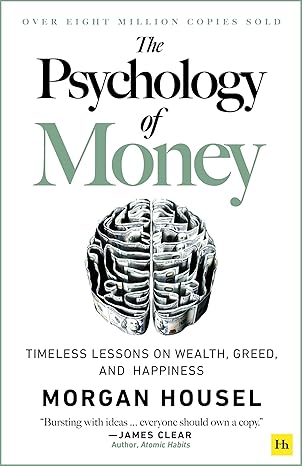
Psychology of Money
By Morgan Housel
Core Book Summary
The Psychology of Money by Morgan Housel is a groundbreaking exploration of the complex and often irrational relationship people have with wealth. Unlike traditional finance books that focus on math, formulas, and spreadsheets, Housel's premise is refreshingly human: doing well with money has little to do with how smart you are and everything to do with how you behave. Financial success is not a hard science; it is a soft skill where your psychological makeup, ego, and personal history play the most critical roles. Housel illustrates this by comparing a highly educated finance executive who loses everything due to greed and leverage, with an unassuming janitor who retires a multi-millionaire simply through frugality and the magic of long-term compounding. This stark contrast highlights that financial genius is often just ordinary people demonstrating extraordinary patience and emotional control. One of the most profound lessons in the book revolves around the twin forces of luck and risk. Every financial outcome is influenced by factors outside of our individual control. Therefore, we should be careful when judging financial successes (both ours and others) because not all success is due to hard work, and not all poverty is due to laziness. Understanding this fosters humility and prevents fatal financial risks. Furthermore, Housel draws a vital distinction between getting wealthy and staying wealthy. Getting money requires taking risks, being optimistic, and putting yourself out there. Keeping money, however, requires the exact opposite: humility, fear, and an acceptance that what you have made can be taken away. This leads to the concept of 'enough'—knowing when to stop moving the goalposts and resisting the urge to risk what you have and need for what you don't have and don't need. The book also redefines wealth. Wealth is not the fancy cars, mansions, or luxury watches you see. Those are simply examples of money being spent. True wealth is hidden. It is the money not spent, the investments left to grow, and the financial assets that give you the ultimate dividend: freedom. The highest form of wealth is waking up every morning and saying, 'I can do whatever I want today.' Ultimately, The Psychology of Money teaches that financial independence is less about maximizing returns and more about managing your behavior, leaving room for error, and using money to buy control over your time.
Key Takeaways
- Behavior Over Intelligence: Financial success is a soft skill. It is not about your IQ or math skills, but about your emotional control, patience, and everyday behavior towards money.
- Luck and Risk are Siblings: No outcome is 100% due to effort or intelligence. Acknowledge the role of luck in success and the role of unpredictable risk in failure to maintain humility.
- The Concept of 'Enough': The hardest financial skill is getting the goalpost to stop moving. Comparing yourself to others leads to taking unnecessary risks. Learn to recognize when you have enough.
- The Magic of Compounding: Warren Buffett's immense wealth isn't just because he is a great investor, but because he has been investing consistently for over 75 years. Time is the most powerful force in investing.
- Getting Wealthy vs. Staying Wealthy: Making money requires risk and optimism, but keeping money requires humility, frugality, and a healthy dose of fear that it can be taken away.
- Wealth is What You Don't See: People often confuse being rich (spending money on visible luxuries) with being wealthy. Wealth is the income not spent; it is the financial assets that give you future options.
- The Ultimate Dividend is Time: The greatest value of money is its ability to give you control over your time. Being able to do what you want, when you want, is the highest form of wealth.
- Be Reasonable, Not Purely Rational: You are a human, not a spreadsheet. It is better to adopt a financial strategy that you can comfortably stick to rather than a cold, mathematically perfect plan.
- Leave Room for Error: The future is inherently unpredictable. You must have a margin of safety (like an emergency fund) in your financial plan to survive inevitable bad luck.
- Personal Experiences Shape Logic: Everyone has a different generational experience. What seems like a crazy financial decision to you might make perfect sense to someone else based on their unique life experiences.