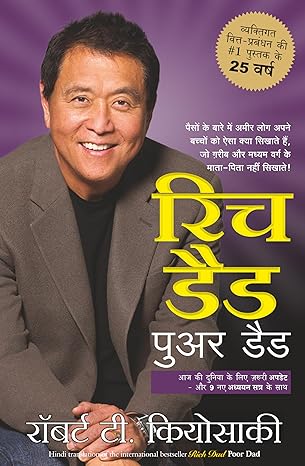
Rich Dad Poor Dad
By Robert Kiyosaki
Core Book Summary
Rich Dad Poor Dad by Robert Kiyosaki is arguably the most influential personal finance book of all time. It is framed around Kiyosaki's childhood in Hawaii and the contrasting financial philosophies of two father figures. His biological father, the 'Poor Dad', was a highly educated, hardworking government employee who struggled financially his whole life. His best friend's father, the 'Rich Dad', was an eighth-grade dropout who went on to become one of the wealthiest men in Hawaii. The book highlights how schools teach us to work hard for money, but completely fail to teach us how money actually works. The most foundational lesson of the book is the stark difference between the poor, the middle class, and the rich. The poor and middle class work for money, trading their time for a paycheck driven by fear (of not paying bills) and greed (wanting a better lifestyle). The rich, however, do not work for money; they figure out how to make money work for them by acquiring income-generating assets. Kiyosaki introduces a radically simple definition of assets and liabilities that challenges traditional accounting. An asset is simply anything that puts money in your pocket, regardless of whether you work or not (e.g., real estate yielding rental income, dividend-paying stocks, intellectual property). A liability is anything that takes money out of your pocket (e.g., car loans, credit card debt, and mortgages). The greatest financial trap of the middle class is buying liabilities that they mistakenly believe are assets. For instance, Kiyosaki controversially argues that your primary house is not an asset because it constantly costs you money in taxes, maintenance, and interest. Financial literacy is the ultimate cure for poverty. Kiyosaki insists that it doesn't matter how much money you make; what matters is how much money you keep. He urges readers to 'mind their own business', which means keeping your daytime job but simultaneously starting to build your asset column. Furthermore, he explains how the rich use the power of corporations to protect their wealth and legally minimize taxes. The middle class earns, pays taxes, and lives on what is left. Corporations earn, spend everything they can on expenses, and are taxed only on what is left. Ultimately, Rich Dad Poor Dad is a wake-up call to stop relying on the illusion of job security and start taking control of your financial education to build generational wealth.
Key Takeaways
- The Rich Don't Work for Money: While the middle class trades their time for a steady paycheck out of fear and greed, the rich spend their time acquiring assets that generate passive income.
- Assets vs. Liabilities: The golden rule of wealth: An asset puts money in your pocket; a liability takes money out. The rich buy assets, while the poor only have expenses, and the middle class buys liabilities they think are assets.
- Your House is Not an Asset: A primary residence takes money out of your pocket every month (mortgages, taxes, repairs). It only becomes an asset if it generates positive cash flow (like a rental property).
- Mind Your Own Business: Your profession is how you pay the bills, but your 'business' is your asset column. Keep your day job, but spend your free time buying and building real assets.
- Financial Literacy is Vital: Intelligence solves problems and produces money, but money without financial intelligence is money soon gone. You must learn how to read financial statements and understand cash flow.
- The Power of Corporations and Taxes: The rich use corporate structures to their advantage. A corporation earns, spends everything it can, and pays taxes on what's left. Employees earn, get taxed first, and live on what's left.
- The Rich Invent Money: Financial success is not about waiting for opportunities to fall into your lap. It is about training your mind to see opportunities that others miss and putting together deals to create value.
- Work to Learn, Don't Work for Money: Do not choose a job purely for the salary. Choose a job for the skills you will learn—especially skills in sales, marketing, and communication.
- Overcome the 5 Obstacles: Even financially literate people fail to build wealth because of five roadblocks: Fear, Cynicism (doubt), Laziness, Bad Habits, and Arrogance. You must master your psychology to succeed.
- Teach Your Children About Money: Do not rely on the school system to teach your kids about financial independence. It is your responsibility to pass down financial intelligence to the next generation.