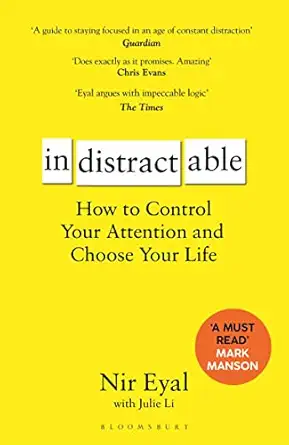
Indistractable
By Nir Eyal
Core Book Summary
Indistractable: How to Control Your Attention and Choose Your Life by Nir Eyal provides a modern, science-backed framework for taking back control of your time in an age of constant digital interruptions. Eyal, who previously wrote the bestselling book 'Hooked' (which taught tech companies how to make their products addictive), flips the script in this book to teach consumers how to break those very habits. The central premise is that distraction is rarely just about technology; it is almost always an attempt to escape psychological discomfort. We check our phones not just because they beep, but because we feel bored, anxious, lonely, or stressed. Until we deal with these 'internal triggers,' taking a digital detox or throwing away our smartphone will be completely useless, as our brains will simply find a new way to get distracted. the Indistractable model consists of four key steps. Step One: Master Internal Triggers. You must learn to recognize the uncomfortable feelings that precede a distraction. Eyal suggests 'surfing the urge'—sitting with the discomfort for ten minutes before giving in to the distraction. Often, the urge passes. Step Two: Make Time for Traction. Traction is any action that pulls you toward what you really want. Eyal advocates heavily for timeboxing: planning out every minute of your day in a calendar. You cannot call something a 'distraction' unless you know exactly what it is distracting you from. If your calendar is blank, everything is a distraction. Step Three: Hack Back External Triggers. This involves taking practical steps to silence the noisy world. Turn off non-essential notifications, remove toxic apps from your home screen, and set clear boundaries with coworkers so you aren't constantly interrupted in the office. Step Four: Prevent Distraction with Pacts. Make precommitments to keep yourself on track. This could be an 'effort pact' (using website blockers), a 'price pact' (betting money with a friend that you will finish a task), or an 'identity pact' (calling yourself 'indistractable' rather than someone 'trying to focus'). By combining psychological awareness with practical systems, Indistractable offers a highly realistic, empowering guide to doing exactly what you say you are going to do.
Key Takeaways
- Traction vs. Distraction: Traction is any action that moves you toward what you really want. Distraction is any action that pulls you away. Both are driven by the same thing: the desire to escape discomfort.
- Master Internal Triggers: The root cause of almost all distraction is a desire to escape negative emotions like boredom, anxiety, or stress. Identify the feeling that triggers your urge to check your phone.
- The 10-Minute Rule: When you feel the urge to get distracted, tell yourself you can give in, but only after 10 minutes. By surfing the urge and waiting, the desire often fades away completely.
- Timeboxing is Essential: You can't call something a distraction unless you know what it distracted you from. Schedule every minute of your day. If you plan to watch Netflix for two hours, it's traction, not distraction.
- Hack Back Your Smartphone: Turn off all non-human notifications (alerts from apps, games, news). Rearrange your home screen to only include essential tools, moving addictive apps to search-only access.
- Hack Back Your Email: Unsubscribe mercilessly. When checking emails, process them by when they need a reply (e.g., 'Today' vs 'This Week') rather than reading and leaving them in your inbox.
- Effort Pacts: Add friction to bad habits. Use website blockers or apps that lock you out of social media during deep work hours, making it highly difficult to get distracted.
- Price Pacts: Put your money where your mouth is. Bet a friend $50 that you will finish a specific project by Friday. The fear of losing money is a massive motivator to stay on track.
- Identity Pacts: Change how you view yourself. Don't say 'I am trying to stop looking at my phone.' Say 'I am indistractable.' Aligning your identity with your goals makes behavior change easier.
- Communicate Boundaries: In an office environment, use visual cues (like a specific desk sign or headphones) to signal to coworkers that you are doing deep work and should not be interrupted.