Essentialism
By Greg McKeown
Core Book Summary
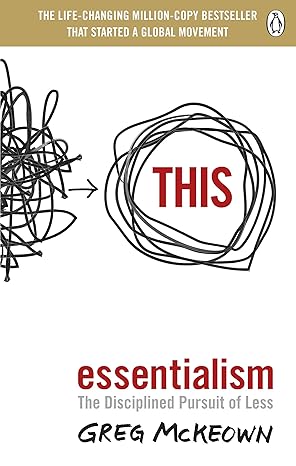
Essentialism: The Disciplined Pursuit of Less by Greg McKeown is a highly practical and philosophical guide to reclaiming your time, energy, and life. In a modern world that glorifies being busy, multitasking, and 'having it all', McKeown argues that we are spreading ourselves entirely too thin. The result is that we make a millimeter of progress in a million different directions, ultimately feeling overworked but underutilized. Essentialism is not merely a time-management strategy or a productivity hack; it is a systematic discipline for discerning what is absolutely essential, and then ruthlessly eliminating everything that is not. McKeown introduces the 'Paradox of Success'. When we are highly focused on a specific goal, we achieve success. That success then brings new opportunities and options. However, these new options inevitably distract us from the very focus that made us successful in the first place, leading to our decline. To combat this, we must adopt the mindset of an Essentialist. A Non-Essentialist thinks 'I have to do everything' and 'I can do both'. An Essentialist realizes that trade-offs are a fundamental reality of life. They think, 'I choose to do this' and 'What is the most important thing I should be doing right now?' By recognizing that almost everything in the world is noise and very few things are truly vital, we can apply our energy to making a massive impact in the one or two areas that truly matter. The core of the book outlines a three-step process: Explore, Eliminate, and Execute. First, you must create space to 'Explore' and evaluate your options. Essentialists actually spend more time thinking, reading, and contemplating than others, simply so they can identify the vital few among the trivial many. Second, you must 'Eliminate' the non-essentials. This requires massive courage because it means learning how to say 'No' gracefully but firmly to bosses, colleagues, and friends. If it isn't a clear 'Hell yes!', it must be a 'No'. Finally, you must 'Execute'. Once you have stripped away the non-essentials, you must build a system and routine that makes doing the essential things as effortless as possible. McKeown emphasizes the absolute necessity of sleep, play, and protecting your personal boundaries to maintain elite performance. Ultimately, Essentialism is about taking back the power of choice. If you do not prioritize your own life, someone else will prioritize it for you.
Key Takeaways
- The Core Concept of Essentialism: It is not about doing more things in less time; it is about getting only the right things done. It is the disciplined pursuit of 'less but better'.
- The Paradox of Success: Clarity of purpose leads to success. Success leads to more options. These options distract you from your original purpose, ultimately leading to a decline in your performance.
- The Reality of Trade-Offs: You cannot have it all or do it all. Every time you say 'yes' to something, you are implicitly saying 'no' to something else. Embrace trade-offs strategically.
- The Power of Choice: We often forget that we have the ability to choose where we spend our energy. If you do not proactively prioritize your life, someone else (your boss, family, society) will do it for you.
- The 90 Percent Rule: When evaluating an option or opportunity, rate it on a scale of 0 to 100. If it scores lower than a 90, change the score to a 0 and reject it. If it isn't a clear 'Hell yes!', then it is a 'No'.
- The Courage to Say No: Eliminating the non-essentials requires saying 'no' frequently. It might feel uncomfortable for a moment, but people will respect you more in the long run for having clear boundaries and focus.
- Create Space to Escape: In our hyper-connected world, you must deliberately schedule time to unplug, think, and read. You need this quiet space to discern the vital few from the trivial many.
- Protect the Asset (Sleep): Non-essentialists wear sleep deprivation as a badge of honor. Essentialists know that their body and mind are their greatest assets. Protecting your sleep is non-negotiable for peak performance.
- Play is Essential: Play is not a waste of time. It sparks creativity, relieves stress, and helps you see new solutions. Play is fundamentally essential to finding your highest point of contribution.
- Routine Genius: Once you have identified what is essential, build a routine around it. A well-designed routine makes executing the most important tasks almost effortless and automatic.