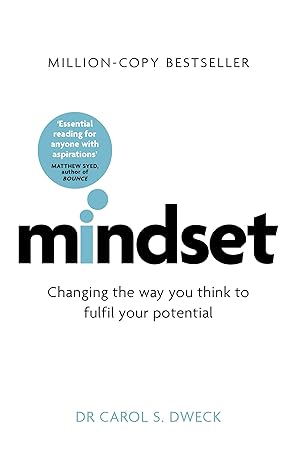
Mindset: The New Psychology of Success
By Carol S. Dweck
Core Book Summary
Mindset by Stanford psychologist Carol S. Dweck is a groundbreaking book that reveals how our core beliefs about our own abilities determine our success in learning, business, sports, and relationships. Dweck’s decades of research have uncovered that people fundamentally operate with one of two mindsets: the Fixed Mindset or the Growth Mindset. Your mindset acts as the silent operating system of your brain, shaping how you react to challenges, criticism, and failure. People with a 'Fixed Mindset' believe that intelligence, talent, and personality are static traits. They believe you are born with a certain amount of brains and talent, and that's that. Because they believe their qualities are carved in stone, they feel a constant need to prove themselves. To someone with a fixed mindset, failure is a direct reflection of their self-worth. If they fail a test or lose a game, it means they are 'stupid' or 'untalented'. As a result, they avoid challenges, give up easily, view effort as fruitless (if you have talent, you shouldn't need effort), and feel threatened by the success of others. Conversely, people with a 'Growth Mindset' believe that their basic qualities can be cultivated and expanded through effort, good strategies, and input from others. They don't believe everyone is the same or can be Einstein, but they believe that everyone can get smarter and better. For them, failure is not a permanent identity; it is simply information. It is a signal that they need to try harder or try a different strategy. Consequently, they embrace challenges, persist through setbacks, see effort as the path to mastery, and find lessons and inspiration in the success of others. The implications of these two mindsets are profound, especially in how we praise children and employees. Dweck warns that praising someone for their inherent talent or intelligence ('You are so smart!') triggers a fixed mindset, making them afraid to take risks lest they look 'dumb'. Instead, we should praise the process, effort, and strategy ('You worked so hard on this!'). The good news is that mindsets are not permanent. By recognizing our fixed mindset triggers, we can consciously shift toward a growth mindset. Mindset is a highly transformative book that proves it is not just our abilities and talent that bring us success, but whether we approach them with a fixed or growth mindset.
Key Takeaways
- The Fixed Mindset: The belief that your intelligence, personality, and talents are static and carved in stone. This creates an urgent need to constantly prove yourself and avoid looking stupid.
- The Growth Mindset: The belief that your basic abilities can be developed through dedication and hard work. Brains and talent are just the starting point.
- The Meaning of Failure: In a fixed mindset, failure defines you (e.g., 'I am a loser'). In a growth mindset, failure is just a temporary setback and an opportunity to learn and improve.
- The Danger of Praising Intelligence: Telling a child 'You are so smart' puts them in a fixed mindset. They will avoid difficult challenges in the future so they don't lose the 'smart' label.
- Praise the Process: To foster a growth mindset, always praise the effort, strategy, focus, and perseverance. Say 'You must have worked really hard on this strategy.'
- Effort is Essential: Fixed mindset individuals believe that if you have to try hard, you must lack talent. Growth mindset individuals know that effort is the only thing that unlocks true potential.
- Dealing with Criticism: A fixed mindset views negative feedback as a personal attack. A growth mindset views criticism objectively, as valuable data needed to adjust and improve.
- The Success of Others: People with a fixed mindset feel threatened by the success of their peers. People with a growth mindset find inspiration and lessons in the success of others.
- Mindsets in Business: Companies led by fixed-mindset CEOs (who believe they are inherent geniuses) often fail because they refuse to admit mistakes. Growth-mindset companies thrive on constant learning.
- You Can Change Your Mindset: Mindsets are just beliefs, and beliefs can be changed. By actively catching your 'fixed mindset voice' and reframing it, you can train your brain to adopt a growth mindset.