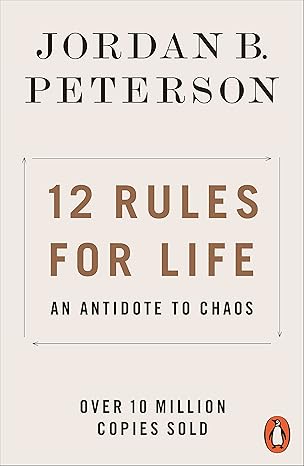
12 Rules for Life: An Antidote to Chaos
By Jordan B. Peterson
Core Book Summary
12 Rules for Life: An Antidote to Chaos by clinical psychologist Jordan B. Peterson is a compelling and thought-provoking synthesis of psychology, evolutionary biology, ancient mythology, religion, and deeply personal anecdotes. The book operates on the fundamental premise that human existence is defined by the eternal tension between order (structure, certainty, and routine) and chaos (the unknown, disruption, and potential). Peterson argues that a meaningful life is not found in the pursuit of fleeting happiness, but rather in striking the delicate balance between these two forces. When society leans too far into order, it becomes tyrannical; when it falls too far into chaos, it breeds nihilism and despair. To navigate this treacherous landscape, Peterson offers twelve profound, seemingly simple rules that demand readers take absolute, uncompromising responsibility for their own lives, their choices, and their flaws before attempting to critique or change the broader world. The book begins with the famous rule: 'Stand up straight with your shoulders back.' Using the evolutionary biology of lobsters, Peterson illustrates how our posture directly affects the serotonin levels in our brain, influencing how the world perceives us and how we perceive ourselves. Taking physical space and facing the world with confidence is the first step toward self-mastery. From there, Peterson delves into deeply psychological advice, urging readers to treat themselves like someone they are genuinely responsible for helping. He observes that people are often much better at caring for their sick pets than taking their own prescribed medication, highlighting a deep-seated lack of self-worth that must be actively overcome. He challenges readers to choose their friends carefully—surrounding themselves with people who genuinely want the best for them, rather than those who pull them down into mediocrity to justify their own failures. A recurring theme throughout the book is the necessity of radical honesty and the pursuit of meaning over mere expediency. Peterson argues that lying, whether to others or to oneself, corrupts the soul and weakens one's ability to withstand tragedy. He stresses the importance of making one's own bed and putting one's own house in perfect order before blaming external systems for personal dissatisfaction. Ultimately, 12 Rules for Life is a strict, fatherly call to action. It does not coddle the reader. Instead, it argues that life involves inevitable suffering and tragedy, but by voluntarily taking on the heaviest burden of responsibility you can bear, you can forge a character capable of withstanding the darkest storms. It is a powerful manifesto against victimhood, urging individuals to aim for the highest good, speak the absolute truth, and find profound meaning in the difficult, necessary work of self-improvement.
Key Takeaways
- Stand up straight with your shoulders back: Your posture affects your brain chemistry. Facing the world confidently and upright signals to yourself and others that you are capable of handling life's challenges, increasing your serotonin and self-worth.
- Treat yourself like someone you are responsible for helping: Stop neglecting your own well-being. We often care better for our pets than ourselves. You must recognize your own value and actively work to heal and improve your life.
- Make friends with people who want the best for you: Distance yourself from toxic individuals who secretly wish for your downfall. Surround yourself with people who celebrate your victories and honestly challenge you to grow.
- Compare yourself to who you were yesterday, not to who someone else is today: Social comparison breeds bitter resentment. Your only valid competition is your past self. Focus on making incremental daily improvements in your own unique journey.
- Do not let your children do anything that makes you dislike them: As a parent, your primary duty is to socialize your children so they can function successfully in the world. Discipline is a form of deep love, not cruelty.
- Set your house in perfect order before you criticize the world: Stop blaming society, capitalism, or the universe for your problems. Take absolute responsibility for your own life and fix your immediate surroundings before demanding systemic change.
- Pursue what is meaningful (not what is expedient): Do not take the easy way out or seek instant gratification. Willingly embrace difficult, long-term goals that bring genuine, lasting meaning to your life, even if it requires significant suffering.
- Tell the truth—or, at least, don't lie: Deception, especially self-deception, warps your perception of reality and weakens your character. Speaking the truth, even when it is incredibly uncomfortable, builds an unshakable foundation for your life.
- Assume that the person you are listening to might know something you don't: Put your ego aside during conversations. True listening means attempting to understand the other person's perspective so deeply that you can articulate it better than they can.
- Pet a cat when you encounter one on the street: Life is inevitably filled with pain, illness, and tragedy. To survive without becoming bitter, you must actively pause to appreciate the small, fleeting moments of beauty and joy that exist even in dark times.