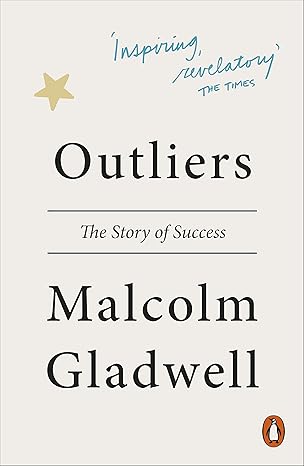
Outliers: The Story of Success
By Malcolm Gladwell
Core Book Summary
Outliers by Malcolm Gladwell is a fascinating investigation into what makes high achievers different. Society typically views success as the result of individual merit, inherent genius, and sheer hard work. We love the myth of the 'self-made' man. However, Gladwell dismantles this myth, arguing that we pay too much attention to what successful people are like, and too little attention to where they are from: their culture, their family, their generation, and the idiosyncratic experiences of their upbringing. Outliers proves that extreme success is almost never a solo act; it is the result of a complex web of hidden advantages, extraordinary opportunities, and cultural legacies. One of the most famous concepts introduced in the book is the '10,000-Hour Rule'. Gladwell examines masters like The Beatles and Bill Gates, arguing that true mastery in any field requires roughly 10,000 hours of deliberate practice. However, the catch is that you cannot achieve 10,000 hours on your own without extraordinary circumstances providing you the time, resources, and opportunity to practice. Bill Gates, for example, had unprecedented access to a high school computer terminal in 1968, giving him a massive head start over almost everyone else in the world. Gladwell also introduces the 'Matthew Effect', which explains how small early advantages compound over time. In Canadian hockey, the vast majority of professional players are born in January, February, and March. Why? The age cutoff for youth leagues is January 1st. A boy born in January is almost a full year older (and physically larger) than a boy born in December. Because he is bigger, he is viewed as 'more talented', gets placed in elite squads, receives better coaching, and gets more practice time. By the time they reach adulthood, the initial tiny advantage has snowballed into a massive gap in skill. The book goes on to explore how cultural legacy deeply affects success. Gladwell explains why Asian students often excel at math (tracing it back to the deeply ingrained cultural work ethic derived from centuries of rice farming) and why certain generations of Jewish immigrants in New York were perfectly positioned to become successful lawyers and doctors. Outliers completely changes how we view success. It reminds us that while hard work and talent are necessary, nobody achieves greatness in a vacuum. Success is a product of history and community, of opportunity and legacy.
Key Takeaways
- The Myth of the Self-Made Man: Extreme success is never just about individual talent or hard work. It is always a combination of hidden advantages, timing, and extraordinary opportunities.
- The 10,000-Hour Rule: Achieving world-class mastery in any complex skill requires approximately 10,000 hours of deliberate practice. Talent alone is never enough.
- Opportunity Matters as Much as Effort: No one can achieve 10,000 hours of practice without an environment that allows them to do so. Bill Gates and The Beatles had incredibly rare opportunities to practice.
- The Matthew Effect (Accumulative Advantage): 'The rich get richer.' A very small, seemingly insignificant advantage early in life (like being born in January for sports) compounds over time into a massive advantage.
- Timing and Generation: When you were born matters. The richest people in history (like Rockefeller) and the pioneers of the PC revolution (like Steve Jobs and Bill Gates) were all born in very specific, narrow time windows.
- IQ is Not Enough: Having a genius-level IQ does not guarantee success. Practical intelligence (knowing what to say to whom, knowing when to say it, and knowing how to say it for maximum effect) is equally crucial.
- Cultural Legacy: The culture, traditions, and attitudes of our ancestors deeply shape our behavior today, often dictating how we approach work, authority, and problem-solving.
- The Rice Paddy Effect: The stereotype that Asians are better at math is rooted in culture, not genetics. Centuries of cultivating rice required a grueling, relentless work ethic that translates perfectly into solving complex math problems.
- Meaningful Work: Hard work is only a prison sentence if it lacks meaning. Work becomes meaningful when it offers autonomy, complexity, and a direct connection between effort and reward.
- Success is a Group Project: We must stop looking at successful people as isolated heroes. Acknowledging the role of society and luck in success helps us build a fairer world that provides opportunities for everyone.