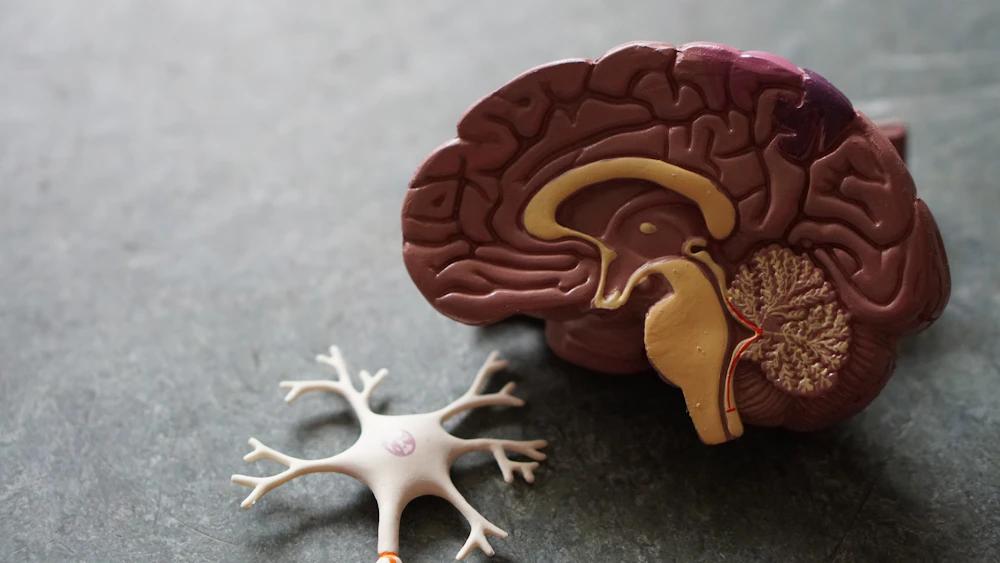
For most of the twentieth century, neurological textbooks taught a bleak doctrine: once a human being reached adulthood around age 20, the physical structure of the brain became fixed and immutable. Like hardened concrete, its 86 billion neurons could slowly decay with age or injury, but could never form new pathways or reorganize their functions. Even the pioneering Spanish neuroanatomist Santiago Ramón y Cajal, who won the 1906 Nobel Prize for proving that the nervous system is made of individual neurons, famously concluded that in adult brains, neural pathways were fixed and unchanging.
Over the past four decades, high-resolution functional MRI (fMRI), positron emission tomography (PET), and cellular microscopy have completely overturned that dogma. The adult brain is not fixed hardware; it exhibits lifelong Neuroplasticity—the biological ability to strengthen, weaken, prune, and physically rewire its synaptic connections in response to learning, practice, environment, and injury.
The Cellular Mechanics: Hebb’s Law and Long-Term Potentiation
In 1949, Canadian psychologist Donald Hebb proposed a foundational theory of learning that neuroscientists summarize in seven words: neurons that fire together, wire together. When two neurons activate at the exact same time repeatedly—such as when you practice a new language, play a musical chord, or write code—two physical transformations occur at the microscopic gap (synapse) between them:
- 1. Functional Plasticity (Long-Term Potentiation / LTP): First discovered in the rabbit hippocampus by Terje Lømo in 1966, repeated electrical stimulation causes the receiving neuron to insert more AMPA glutamate receptors into its membrane, while the sending neuron releases more neurotransmitter molecules. The signal between the two cells becomes faster and stronger.
- 2. Structural Plasticity (Dendritic Spine Growth & Myelination): With sustained practice over weeks and months, neurons physically sprout new dendritic spines (contact branches) to lock in the circuit. Simultaneously, support cells called oligodendrocytes wrap the active neural axons in thicker layers of myelin—a fatty insulation sheath that accelerates electrical signal speed by up to 100-fold.
Conversely, circuits you stop using obey the reverse rule—neurons that fire apart, wire apart—undergoing Long-Term Depression (LTD) and synaptic pruning so the brain can reallocate metabolic energy to active skills.
Landmark Proof: The London Taxi Driver Hippocampus Study
One of the most famous real-world demonstrations of adult structural neuroplasticity was conducted in 2000 by neuroscientist Eleanor Maguire and her team at University College London (UCL). To earn an official license to drive a black cab in London, trainees must spend three to four years memorizing *“The Knowledge”*—a labyrinth of 25,000 streets, thousands of landmarks, and one-way intersections within a six-mile radius of Charing Cross, without using GPS.
When Maguire’s team scanned the brains of licensed London taxi drivers using structural MRI and compared them against control subjects and bus drivers (who drive fixed routes), they found a striking anatomical difference:
- Posterior Hippocampus Enlargement: The posterior hippocampus—the brain region responsible for spatial navigation and mental mapping—was significantly larger in volume in London taxi drivers than in non-drivers or bus drivers.
- Experience Correlation: The longer a driver had been navigating London’s streets on the job, the larger their posterior hippocampus had grown, proving that intensive adult mental training physically expands brain tissue.
Functional Cortical Remapping After Injury and Sensory Loss
Neuroplasticity also allows undamaged regions of the cerebral cortex to take over the jobs of damaged or unused brain tissue—a process pioneered in laboratory experiments by neuroscientist Michael Merzenich:
- Cross-Modal Plasticity in Blindness: In individuals who lose their sight, the primary visual cortex (occipital lobe) at the back of the brain does not sit idle; functional MRI scans show that it gets recruited to process tactile Braille reading and acute auditory localization.
- Post-Stroke Motor Recovery: When a stroke damages part of the motor cortex controlling a patient’s hand, intensive Constraint-Induced Movement Therapy (CIMT) forces adjacent, healthy cortical tissue to sprout new axonal branches and assume control of the paralyzed limb.
4 Evidence-Based Catalysts That Boost Adult Neuroplasticity
Unlike a child’s brain—which absorbs everything passively through effortless developmental plasticity—adult neuroplasticity requires deliberate biological triggers researched extensively by neurobiologists:
- 1. Focused Attention & Active Error Correction (Acetylcholine & Epinephrine): Passive listening does not rewire the adult brain. Making mistakes during focused practice triggers the release of acetylcholine and norepinephrine, chemically tagging specific synapses as needing modification.
- 2. Deep Sleep & Non-Sleep Deep Rest (The Actual Rewiring Phase): Focused practice only *marks* the synapses; the physical remodeling and spine stabilization happen while you sleep, when the hippocampus replays the day’s firing patterns at high speed to the neocortex.
- 3. Aerobic Exercise & BDNF (Brain-Derived Neurotrophic Factor): Vigorous cardiovascular exercise triggers the release of BDNF, a protein that acts like biological fertilizer for new synaptic growth and supports adult neurogenesis in the dentate gyrus of the hippocampus.
- 4. Novelty and Progressive Challenge: Performing a task you have already mastered on autopilot requires minimal neural adaptation; stepping just outside your current skill level keeps plasticity mechanisms active throughout life.
Verified Sources & Further Reading: *Maguire et al., Navigation-Related Structural Change in the Hippocampi of Taxi Drivers, Proceedings of the National Academy of Sciences (PNAS, 2000); Donald O. Hebb, The Organization of Behavior (1949); Pascual-Leone et al., The Plastic Human Brain Cortex, Annual Review of Neuroscience (2005); Eric R. Kandel et al., Principles of Neural Science (McGraw-Hill).*