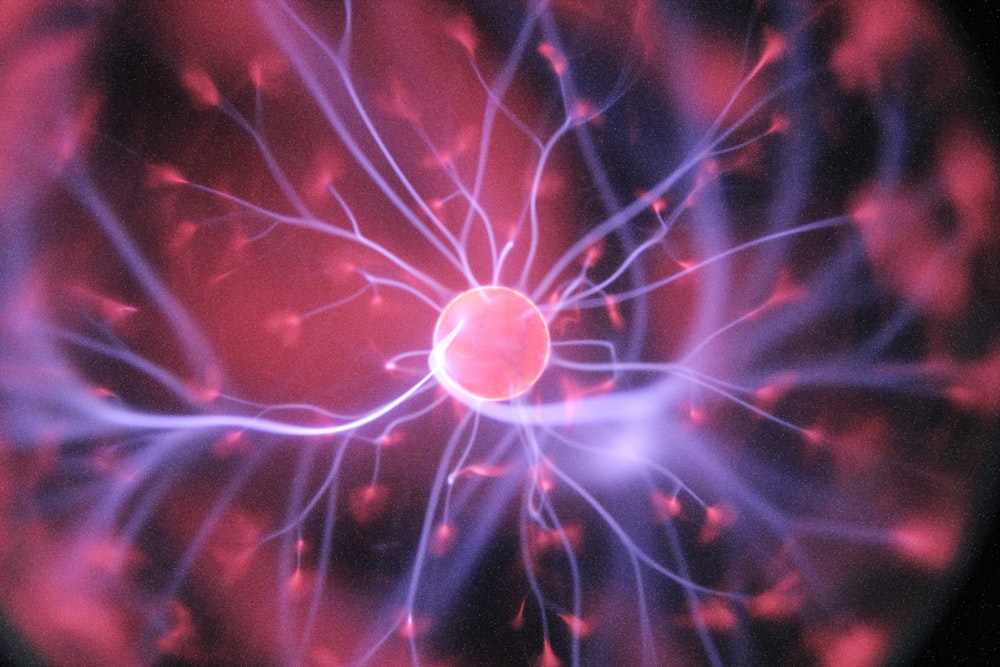
For nearly a hundred years, the central dogma of neurology was bleak and unyielding: scientists believed that the adult human brain was a fixed, hardwired machine—like a cast-iron engine or a printed circuit board. According to this twentieth-century textbook view, your brain grew rapidly during childhood, locked its neural architecture into place by your late teens, and spent the rest of your life slowly losing neurons without ever growing new connections. If you were “bad at math,” “clumsy with languages,” or suffered a brain injury at age thirty-five, conventional wisdom said your hardware was permanently set.
Today we know that dogma was profoundly wrong. Through high-resolution functional MRI, two-photon microscopy, and cellular neurobiology, scientists discovered that the human brain possesses lifelong neuroplasticity (from *neuron*, meaning nerve cell, and *plastikos*, meaning moldable or shapeable). Every time you practice a complex skill, wrestle with a difficult concept, or break an old habit, you are not merely storing abstract data—you are physically remodeling the microscopic anatomy of your brain.
Hebb’s Law: How Thoughts Become Physical Roads
To understand how an invisible thought or daily practice can alter physical tissue, zoom inside the cerebral cortex. Your brain contains roughly 86 billion neurons, and each neuron reaches out to thousands of neighbors across microscopic gaps called synapses, forming over 100 trillion connections.
In 1949, Canadian neuropsychologist Donald Hebb proposed a principle now famous in neuroscience as Hebb’s Law: “Neurons that fire together, wire together.”
Imagine your brain as a dense, untouched hillside covered in tall grass:
- The First Attempt: The first time you try to write a program in JavaScript, pronounce a Telugu consonant cluster, or play a chord on a guitar, your brain has no established pathway for that action. Sending the electrical signal across those unfamiliar neurons is like walking through chest-high grass—it feels slow, awkward, and mentally exhausting.
- Repeated Firing (Synaptogenesis): When you return the next day and repeat that exact effort, the participating neurons release chemical growth factors (like BDNF—Brain-Derived Neurotrophic Factor) that sprout new synaptic buds and add extra neurotransmitter receptors across the gap. The grass begins to flatten into a visible dirt trail.
- Myelination (Paving the Highway): As you practice over weeks and months, specialized support cells in your brain called oligodendrocytes wrap the active neural axons in dozens of layers of a fatty white insulation called myelin. Myelin prevents electrical signals from leaking out and boosts conduction speed by up to 100 times—turning a bumpy dirt trail into a six-lane fiber-optic expressway.
“The brain is a dynamic ecosystem where real estate is constantly reallocated to whatever you use most—and pruned away from whatever you neglect.” — Dr. Michael Merzenich
The London Taxi Driver Study That Shocked Medicine
One of the most famous real-world demonstrations of adult neuroplasticity took place at University College London under neuroscientist Dr. Eleanor Maguire. To become a licensed black-cab driver in London, candidates must pass a legendary examination called “The Knowledge.” Over three to four years of study, trainees must memorize the exact layout of 25,000 streets within a six-mile radius of Charing Cross, along with 20,000 landmarks, hotels, hospitals, and one-way lanes—without ever consulting a GPS map.
When Maguire and her team placed London taxi trainees inside MRI scanners at the start of their training and again years later after they qualified, the images were unmistakable: the posterior hippocampus—the region of the brain responsible for spatial navigation and 3D memory mapping—had physically grown significantly larger in the drivers who passed the exam compared to control subjects and trainees who dropped out.
Similar structural remodeling has since been documented across dozens of human crafts:
- Musicians: Violinists and pianists exhibit a markedly enlarged motor cortex zone corresponding to the four fingers of their fingering hand.
- Mathematicians: Long-term mathematical reasoning increases gray matter density in the inferior parietal lobule, which handles numerical and spatial manipulation.
- Meditation Practitioners: Eight weeks of daily mindfulness training measurably thickens the prefrontal cortex (attention and emotional regulation) while shrinking the volume and reactivity of the amygdala (the brain’s fear and stress alarm).
Why Adult Plasticity Requires Two Keys: Focus and Sleep
If the brain is plastic throughout life, why do children seem to soak up skills effortlessly while adults have to work much harder? Neurobiologist Dr. Andrew Huberman and researchers at Stanford and MIT explain that until roughly age twenty-five, the juvenile brain is bathed in permissive plasticity chemicals that record almost any passive experience. After age twenty-five, the brain closes that passive window so your core identity and survival skills remain stable.
However, an adult can unlock dramatic neuroplasticity at any age—whether thirty, fifty, or eighty—by turning two neurochemical keys in sequence:
Key 1: Intense Alertness and Frustration (Epinephrine & Acetylcholine)
In an adult brain, passive background exposure (like leaving a podcast playing while you scroll on your phone) triggers zero neuroplasticity. To tell your adult brain that a circuit needs to be rewired, you must pay undivided attention and push slightly past your current skill level until you make mistakes and feel mild frustration.
That feeling of mental strain is not a sign that you are failing; it is your brainstem releasing epinephrine (adrenaline) for alertness and acetylcholine, which acts like a glowing chemical highlighter pen marking the exact synapses you just used for remodeling.
Key 2: Deep Rest and Sleep (When the Rewiring Actually Happens)
Here is the twist most learners miss: no physical rewiring actually happens while you are practicing. During your focused study session, you are only *marking* the synapses with acetylcholine. The actual physical construction of new synaptic connections happens hours later—during 20-minute periods of quiet waking rest immediately after learning, and during deep Non-REM and REM sleep that night.
4 Rules to Harness Neuroplasticity in Daily Life
- Embrace the Strain of the Learning Zone: Whenever a subject feels challenging or clumsy, remind yourself that the friction you feel is literally the sensation of epinephrine and acetylcholine tagging your neurons for growth. Easy repetition maintains old circuits; only focused challenge builds new ones.
- Use the 90/10 Rest Pause: After 45 to 90 minutes of intense reading, coding, or language study, sit quietly with your eyes closed or walk outside without looking at a screen for 10 minutes. Neuroimaging shows that during this quiet pause, your hippocampus replays the new pattern at 20x speed, locking it in before interference can erase it.
- Practice Spaced Repetition Over Cramming: Myelin insulation cannot be wrapped in a single night. Practicing a skill for 25 focused minutes across ten consecutive days builds far thicker, more permanent neural highways than a single 250-minute marathon.
- Remember “Use It or Lose It” Works Both Ways: Just as the brain strengthens circuits you practice, it uses synaptic pruning to dissolve pathways you stop feeding. Starving an anxious thought loop or a compulsive digital habit of your attention gradually weakens its physical hold on your neural circuitry.